Apr 30, 2026
Stephen DeAngelis
The war in Iran has focused the world on one of its most significant chokepoints — the Strait of Hormuz. As precious resources needed to keep the world economy running smoothly remain sequestered in the Persian Gulf, the world is feeling the pinch. Eswar Prasad, a professor at Cornell University, observes, “The war in Iran is having ripple effects worldwide. Rising energy, fertilizer, and food prices will affect us all. From America, where consumers are paying $4 a gallon for gas, to rich European countries to large emerging market economies such as Brazil and China, no nation has been spared.”[1]
The costs taxpayers will ultimately bear are also mounting. Linda Bilmes, a professor at Harvard’s Kennedy School, conservatively estimates that the first days of the war cost at least $16 billion.[2] She estimates costs linked to the war will to balloon to $100 billion a year. She concludes, “I am certain we will reach $1 trillion for the Iran war.” It didn’t take long for the war to hit consumers in their pocketbooks. Journalist Jim Tyson reports, “Inflation in March jumped more than any time since 2022 while a war-induced surge in gasoline prices pounded a measure of consumer sentiment this month to the lowest level since the start of data collection in 1952.”[3] The gas pump isn’t the only location where consumers are feeling the pinch; the war is also affecting prices in the grocery aisle.
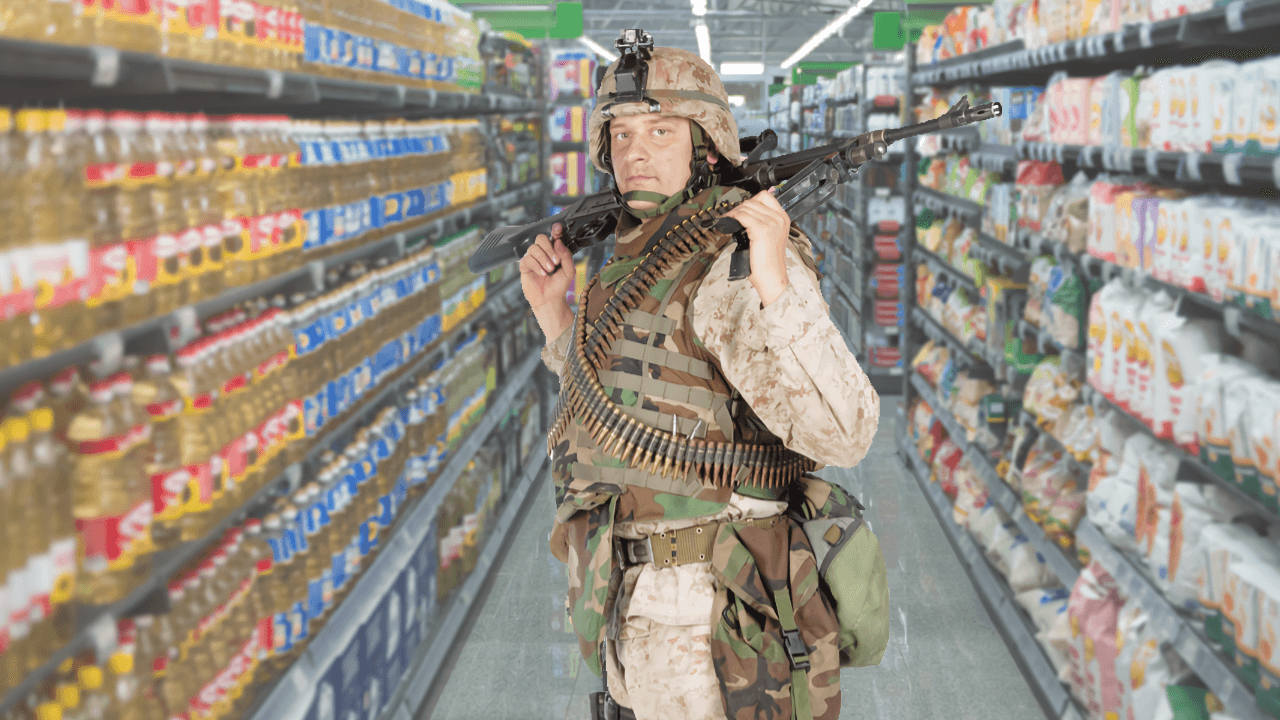
War in the Grocery Aisle
It’s not just in America that consumers are feeling the pinch. Around the world, explains Professor Prasad, “Nearly half of the average household’s spending goes to food and energy. With much of their populations at the edge of economic deprivation and with meager savings to fall back on, the price surge is a huge blow.” Journalist Michelle Perrett insists, “The escalating Middle East conflict is pushing food inflation, energy prices, and consumer confidence to a breaking point.”[4] She adds, “The Strait of Hormuz remains an area of contention and the US’s blockade of Iranian ports leaves the world in one of its most precarious economic situations in decades. … The result? Food and drink manufacturers and consumers are preparing for higher prices and possible supply disruption.”
In an effort to answer the question — “How have food prices been affected?” — journalist Augustus Bambridge-Sutton spoke to Stephen Butler, co-founder and Market Director at ChAI. Butler explained that although prices have started to rise, the largest increases in food prices are yet to come because we are just “moving into the spring planting and growing seasons.”[5] Bambridge-Sutton reports that food-related commodities have been affected in various ways. He notes that grain-related commodities have been affected most, while soft food commodities (e.g., coffee, cocoa, and dairy) have seen less significant increases. Butler told him, “The longer the situation persists, the more likely it is that infrastructure and supply chains critical to food production will be affected.”
With consumer confidence at a 72-year low, rising food prices are not going to help consumers feel better about the economy. Journalist Rachel Arthur worries the war could result in a perfect economic storm “where oil, gas, and food prices spike and remain high into 2027.”[6] She asks, “What does [this perfect storm] mean for food and beverage?” Currently, she notes, “The disruption from Iran has been less about direct impact on goods; and more about the knock-on effect of the price of oil on transportation and energy. However, as the conflict drags on, there is now increasing pressure on key commodities.” She insists, this pressure will inevitably affect “all food and beverage producers.” The ripple effects in the global food value chain, she predicts, will hit hard “at a moment when industry volumes are already fragile and margins under pressure.”
Consumers are bracing for more bad news in the grocery aisle. Tyson reports, “Concern about inflationary harm from the Iran war [has] flared across all demographic groups — by age, income and political affiliation.” According to reporters at the Shelby Report, KeyBank’s 2026 Financial Mobility Survey Pulse Poll found, “Nearly nine in 10 Americans have made at least one adjustment to their financial behavior in response to economic pressures, with grocery prices ranking as the No. 1 concern.”[7] The Shelby staff adds, “The most common consumer response to financial pressure is switching to less expensive brands or services, cited by 59 percent of respondents.”
Concluding Thoughts
There is a military acronym that fits today’s consumer situation: BOHICA, which stands for “Bend Over, Here It Comes Again.” The term is used to describe an impending unpleasant situation or bad news that is about to repeat itself. Journalist Ivana Pino reports, “Experts say it could be some time before Americans see the true impacts of the war on their grocery bills.”[8] That is not good news since there has already been some impact on grocery prices. Journalist Jacqueline Munis reports, “A Fortune analysis of produce wholesale prices from USDA data found grocery-cart staples such as tomatoes, bananas, and yellow onions have experienced significant price spikes since the war began. The United Nations reported its global food price index rose by 2.4% in March, the second consecutive month of rising prices.”[9]
Jeffrey Dorfman, a professor at North Carolina State University, told Munis, “Grocery prices could get much higher if the war continues. … While the current effects of the war on grocery prices may be mild, customers could feel the pain for the rest of the year if the war continues another two or three months.” Journalist Sky Chadde reports, “Food prices were already expected to increase in 2026, and at a faster rate than their 20-year historical average. But the war with Iran will likely turbocharge grocery prices, particularly beef, according to revised forecasts from the U.S. Department of Agriculture.”[10]
While none of this is good news for consumers, Pino suggests a few ways consumers can mitigate rising food prices. First, she suggests buying in bulk. Second, swap name brands for generic. Finally, she suggests using a rewards credit card. She explains, “There are several rewards credit cards that offer cash back and bonuses for purchases made at supermarkets, as well as retailers, restaurants, gas stations, and more. Using a rewards card for grocery purchases can earn rewards on purchases you were planning to make anyway.” Although those suggestions may help, nothing is going to take away the hit consumer budgets are likely to feel in the months ahead.
Footnotes
[1] Eswar Prasad, “Nearly Half the World Is Bearing the Brunt of Global Disorder. Don’t Expect Richer Countries to Get a Pass.” The New York Times, 20 April 2026.
[2] Sarah Bregel, “A Harvard economist calculated exactly how much the Iran war will cost U.S. taxpayers—and it’s staggering,” Fast Company, 14 April 2026.
[3] Jim Tyson, “Inflation surges most since 2022 as consumer sentiment hits record low,” CFO Dive, 10 April 2026.
[4] Michelle Perrett, “Iran war pushes global food markets toward crisis mode,” Food Navigator Europe, 15 April 2025.
[5] Augustus Bambridge-Sutton, “Iran war: Six weeks in, how have food prices changed?” Food Navigator Europe, 16 April 2026.
[6] Rachel Arthur, “How the Iran conflict could reshape our shelves,” Food Navigator USA, 14 April 2026.
[7] Staff, “Poll: 88% Of Americans Adjusting Financial Behavior As Grocery Prices Rise,” The Shelby Report, 6 April 2026.
[8] Ivana Pino, “It's not just gas prices. How the Iran war is coming for your grocery bill.” Yahoo Finance, 17 April 2026.
[9] Jacqueline Munis, “‘You can never really catch up’: The Iran war is exacerbating already high grocery bills, and it will only get worse if the war continues, experts say,” Fortune, 8 April 2026.
[10] Sky Chadde, “With Iran War, food prices will grow faster than originally expected this year, USDA predicts,” Investigate Midwest, 14 April 2026.