Stephen DeAngelis
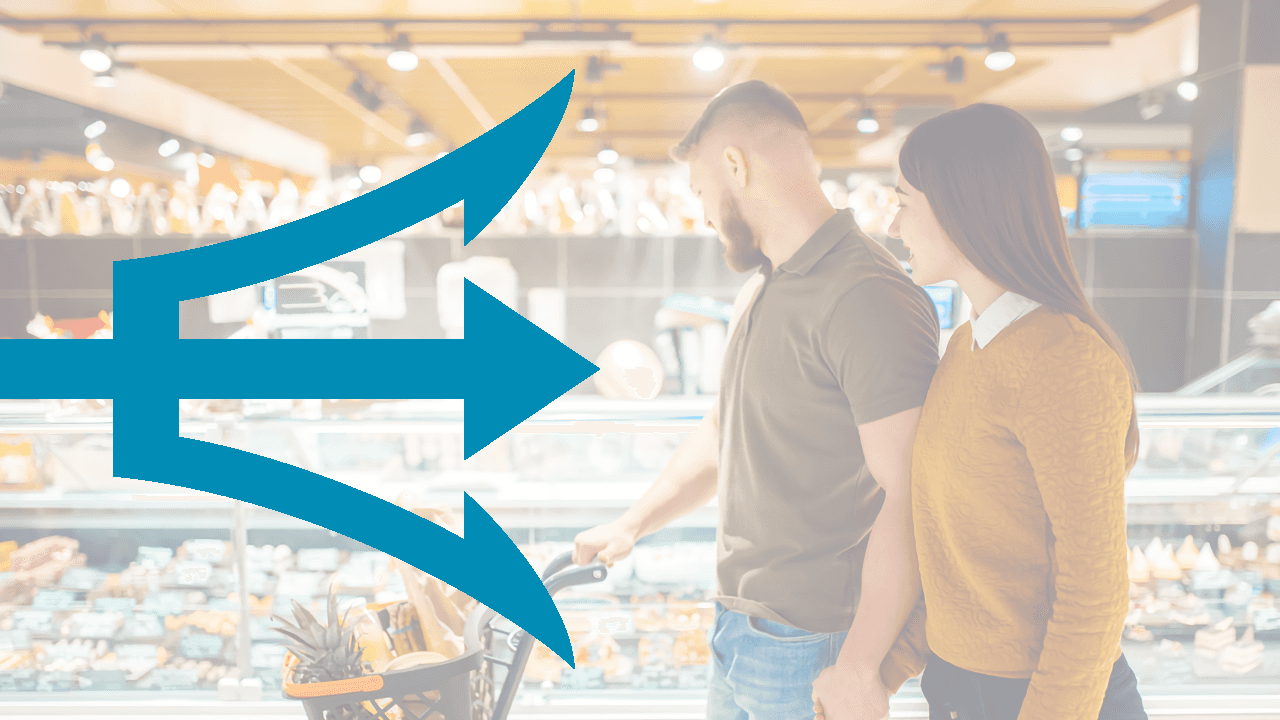
A headline from a recent PYMNTS email declared, “Study Finds the K-Shaped Economy Just Added Another Branch.”[1] The PYMNTS staff added, “Forget the K. PYMNTS data from roughly 2,000 consumers surveyed each month since October suggests the economy’s divides are becoming more complex. While some households continue to spend with confidence, others are rationing purchases or exhausting their financial buffers.” Based on the PYMNTS study, today’s economy looks more like a horizontal trident than it does a K.
Consumers Under Pressure
Even before the war against Iran skyrocketed oil prices and negatively affected the global economy, consumer sentiment was on the decline. Back in December 2025, Boston Consulting Group (BCG) analysts reported, “As we track consumer confidence in economic growth over time, we see that since June 2025 it has grown increasingly negative in most of the developed countries.”[2] They added, “Pessimistic or optimistic, consumers across surveyed countries anticipate increasing their spending — most not because they want to, but because they have to. The predicted rise in spending is driven almost entirely by inflation.” The following month, January 2026, the PYMNTS staff reported, “With the cost of living rising and pocketbooks pressured by financial surprises, millions of American consumers are spending their earnings as soon as they hit their bank accounts, and often because they have no choice — underscoring how financial stress and budgeting nimbleness drive everyday household finances.”[3]
The BCG analysts observed, “Consumers’ decisions about what products or services to purchase are influenced by multiple additional variables.” One of those variables was an increased use of generative AI while making purchasing decisions. Other variables included the types of tradeoffs consumers are making (e.g., buying cheaper store brands rather than name brands). The good news for name brands is that the BCG survey found, “More than 80% ultimately revert to their usual brand or another brand that they have previously tried.” Keeping up with consumer sentiment and spending patterns can be challenging. Artificial intelligence solutions, like the Enterra Consumer Insights Intelligence System™, can help. This System allows consumer packaged goods (CPG) manufacturers and retailers to quantitatively uncover and logically understand the inter-relationships that lead to heightened consumer understanding, hyper-personalized product recommendations, and new product innovation. This is important because, as the BCG analysts conclude, “Geopolitical conflicts, galloping inflation, disrupted supply chains, climate change, and rapid technological changes are ushering in an era of unprecedented complexity.”
Despite the complexity of today’s consumer landscape, food journalist Mary Ellen Kuhn insists what consumers want can be described in a single word: value.[4] She explains, “That’s not surprising given the current economic climate. But how consumers define value is where it gets interesting.” She notes, “Value isn’t all about price.” Jenny Zegler, principal strategist at Mintel, told Kuhn, “Value has a complex definition — meaning both the actual price of a product as well as the tangible and intangible benefits that consumers receive in return for the price.” Nevertheless, a survey conducted by TELUS Agriculture & Consumer Goods found, “Consumers remain cautious. [The survey’s] 2026 findings confirm that price is the top factor influencing purchase decisions.”[5] How important of a variable is price for consumers? If a report by consulting firm Alvarez & Marsal is accurate, the results confirm the TELUS conclusion that it’s the most important factor currently on consumers’ minds. In fact, the report concludes, “Many consumers are done trading down products at the supermarket. They’re instead ready to trade out to lower-priced retailers.”[6]
The Trident-shaped Economy
All of this pressure on consumers isn’t being felt equally. For the past several years, economists have described this variance in economic impact as the K-shaped economy. Economic journalist Christopher Rugaber observes, “From corporate executives to Wall Street analysts to Federal Reserve officials, references to the ‘K-shaped economy’ are rapidly proliferating.”[7] Like many people, he then asks, “So what does it mean?” In simple terms, it’s good news for the rich and bad news for everyone else. According to the latest PYMNTS Consumer Expectations Index, this split between the rich and everybody else needs a bit of fine-tuning.
According to PYMNTS research, there are three distinct groups emerging. The first group is made up of affluent people who have no financial worries. This group represents the upper fork of the trident. The second group includes middle-class consumers who don’t live paycheck-to-paycheck. They represent the middle fork of the trident. And the final group includes consumers living paycheck-to-paycheck. They represent the bottom fork of the trident. The two groups of greatest interest to PYMNTS analysts are represented by the middle and bottom forks of the trident. They note that how those households feel about their financial circumstances is “a more reliable guide to spending than broad economic sentiment.”
They suggest the CPG sector should treat the middle and bottom groups differently. They explain, “Consumers who aren’t living paycheck to paycheck have a steady capacity and softer confidence. They can act and intend to keep acting. Their hesitation is about the country’s economy, not their own balance sheet. Discounting here leaves margin on the table. The lever is message and product, premium offerings, and experiences and reassurance, rather than price cuts.” It’s a different story for the bottom group. According PYMNTS analysts there is a fine line between this middle group and the top part of the lower group. They explain, “Those living paycheck to paycheck without struggling to pay bills are the nervous ‘Costco economy.’ Capacity is holding but thinning, and behavior has already shifted toward value. This group is still spending and still winnable. However, it responds to predictability over persuasion: transparent total cost, budgetable bundles, loyalty and autopay, and clear value. It’s also the group most likely to trade down between brands, so retention matters more than acquisition.”
Finally, they address the bottom group. “Consumers living paycheck to paycheck and struggling to pay bills are where the constraint is rising. This is the group where delinquency and missed bills are increasing. Forcing one-shot payments or stacking late fees converts a temporary liquidity problem into permanent customer loss. The better move is to reduce friction with flexible repayment, offer the ability to split payments or shift due dates, and provide earned-wage access and low-cost, short-term liquidity that keeps the customer in the system. The widening capacity gap here is constrained demand, not absent demand.”
Concluding Thoughts
There is one thing that lowering consumer sentiment represents among consumers at every level: weariness. Journalist Shannon Carroll writes, “The average consumer is tired. Tired of spending too much on eggs, tired of pricing roulette, tired of the monthly bill stack, tired of ordinary life requiring this much math.”[9] I agree with PYMNTS analysts that general tendencies are not as important as the feelings of each individual household. The finer consumer sentiment can be tuned the better able the CPG sector will be equipped to respond to household needs. Although I am an optimist by nature, I am also a realist. People are struggling — some more than others. The CPG sector has a responsibility to meet the needs of people at every economic level and AI can help them do that.
Footnotes
[1] Staff, “Study Finds the K-Shaped Economy Just Added Another Branch,” PYMNTS Today email, 9 June 2026.
[2] Gaby Barrios, Ankur Jain, Isha Chawla, and Lauren Taylor, “Under Pressure, Consumers Shift Their Spending,” Boston Consulting Group, 15 December 2025.
[3] Lynnley Browning, Johanna Fajardo, and Franco Coraggio, “Running on Empty: How Paycheck-to-Paycheck Living Turns Small Shocks Into Big Crises,” PYMNTS, January 2026.
[4] Mary Ellen Kuhn, “What Consumers Want in 2026,” Institute of Food Technologists (IFT), 12 January 2026.
[5] TELUS Agriculture & Consumer Goods, “Meeting the 2026 shopper: building value in a shifting market,” Food Dive, 20 January 2026.
[6] Jeff Wells, “Pardon the Disruption: The research that should worry traditional grocers right now,” Grocery Dive, 13 May 2026.
[7] Christopher Rugaber, “Here’s why everyone’s talking about a ‘K-shaped’ economy,” Associated Press, 1 December 2026.
[8] Matthew Albrecht, John Gaffney, and Lynnley Browning, “The Three-Speed Consumer Economy: How Financial Capacity Is Rewriting Spending Behavior,” PYMNTS, June 2026.
[9] Shannon Carroll, “Americans are still stuck in inflation's daily grind,” Quartz, 23 March 2026.