Dec 9, 2025
Stephen DeAngelis
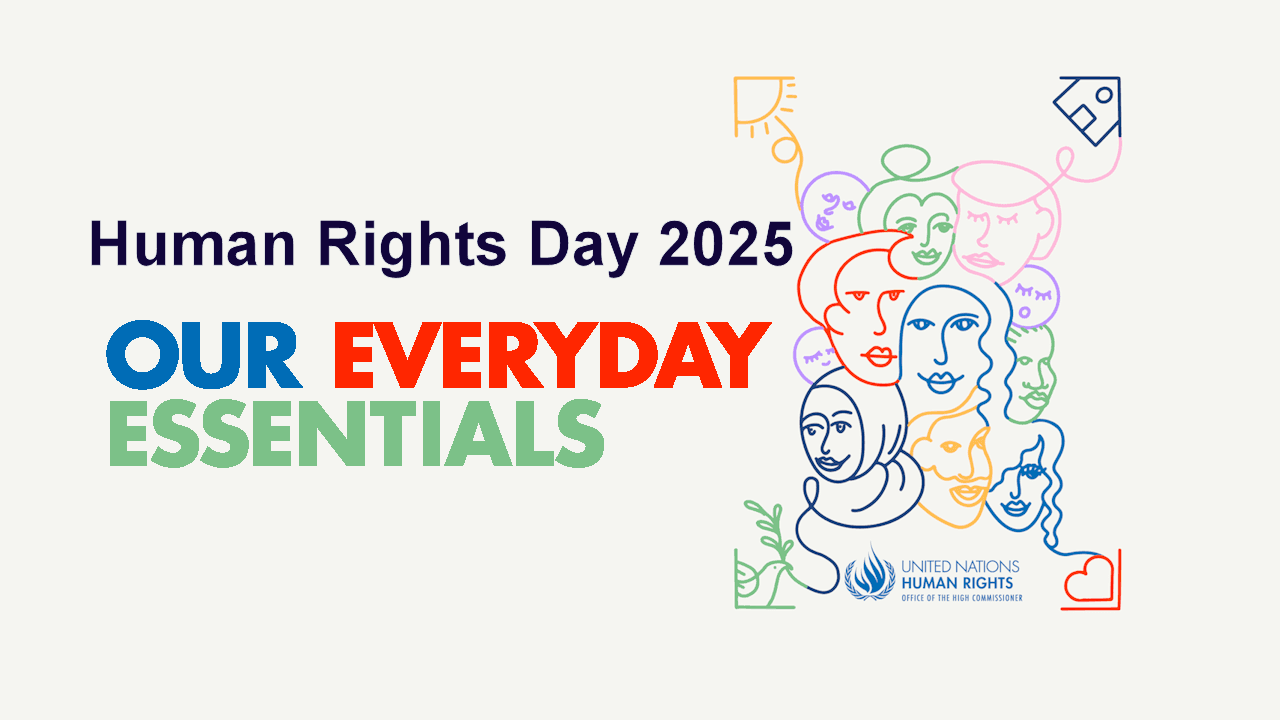
Tomorrow, 10 December, is recognized globally as Human Rights Day. It commemorates the day in 1948 the United Nations General Assembly adopted the Universal Declaration of Human Rights. The United Nations staff supporting the Office of the Human Rights High Commissioner notes, “When the General Assembly adopted the Declaration, it was proclaimed as a ‘common standard of achievement for all peoples and all nations,’ towards which individuals and societies should ‘strive by progressive measures, national and international, to secure their universal and effective recognition and observance.’ The Universal Declaration of Human Rights sets out a broad range of fundamental rights and freedoms to which all of us are entitled. It guarantees the rights of every individual everywhere, without distinction based on nationality, place of residence, gender, national or ethnic origin, religion, language, or any other status.”[1] The UN Human Rights High Commissioner, Volker Türk, adds, “Human rights are our compass in turbulent times — guiding and steadying us through uncertainty.”[2]
No one can deny that we are living in turbulent and uncertain times. Geopolitical tensions and conflicts dot the earth. Climate change is making parts of the planet uninhabitable and raising concerns about future food production and access to water. And human rights issues continue to plague countries around the globe. These are everyday events. Which is one reason this year’s Human Rights Day theme is: “Human Rights: Our Everyday Essentials.” The UN staff explains, “[This campaign] seeks to reaffirm the enduring relevance of the Universal Declaration of Human Rights (UDHR) and its core values — equality, justice, freedom, and dignity — reminding us that human rights remain a steadfast promise for society.”
When we reflect on life’s essentials, we generally think about access to food, water, and shelter — most of us take human rights for granted. Unfortunately, that’s not true for many people around the world. The staff at RELX explains that Human Rights Day is a time for “reflection and action” and “an opportunity for people worldwide to reflect on the progress made in the realm of human rights and to take action to address ongoing challenges. Through education and awareness-raising campaigns, the day helps to strengthen the resolve of individuals and institutions to protect and promote human rights.”[3]
Mr. Türk has stated, “Human rights are the threads holding the social fabric together. They protect our differences so that our diversity can drive progress and unity. They are the bonds of trust between people and the institutions of the state.”[4] On the other hand, human rights violations can have a negative impact on businesses and the global economy. Heather C. Panton, a Senior Advisor on Social Impact & Human Rights at Thomson Reuters, reports, “Forced labor generates an estimated $236 billion in illicit revenue annually, according to data presented by International Labor Organization, built on the exploitation of nearly 28 million people, including more than 3 million children. Beyond its devastating human toll, forced labor poses escalating financial, legal, and reputational risks for companies operating across global supply chains.”[5] She adds, “Addressing this issue isn’t just a moral obligation; it’s a business imperative. True progress demands collective action across governments, companies, and civil society to build systems that protect vulnerable people at scale.”
Eliminating forced labor in the supply would be wonderful. Realistically, however, achieving that goal remains elusive. Panton explains, “Despite progress, opacity persists. Supply chains often span multiple tiers and jurisdictions, complicating traceability and due diligence. Ethical sourcing still struggles to gain executive prioritization, even as it carries both strategic and human rights value. No single organization can end forced labor alone. Governments, businesses, and NGOs must collaborate decisively to eradicate modern slavery. Fortunately, technology and data are making supply chain due diligence more achievable than ever.” One of the technologies to which she refers is artificial intelligence (AI).
Freelance writer Nithin Coca reports, “[Several companies are now leveraging AI] with the goal of using technology to increase visibility into global supply chains, and empower brands to reduce or eliminate social and environmental risks.”[6] Coca cites Jay Risser, an AI educator and expert, who notes, “One of the key advantages of AI is its ability to provide unparalleled visibility into complex supply chains. AI-driven supply chain visibility enables businesses to make informed decisions and build partnerships with suppliers committed to ethical practices.” Tony Pelli, Practice Director, for Security and Resilience at BSI, also believes AI has the potential to help in this area. He writes, “Organizations have the opportunity to look to Artificial Intelligence for help — a decidedly new-age solution, albeit one that has been around in different forms for decades. Discussions of AI’s potential to improve supply chain efficiencies are already beginning to take hold, but it may be the case that AI could also be a powerful instrument in eradicating modern slavery, helping industry leaders pave the way for a more ethical, sustainable supply chain.”[7]
Some company executives might wish that the forced labor issue would simply go away. That’s not going to happen. As Alan Jope, former CEO of Unilever, has stated, “Modern slavery poses uncomfortable truths for businesses and individuals. However, we must make the choice to act — to better protect those who are being exploited for monetary gain and fight these devastating human rights abuses. Companies must begin to examine their supply chains for modern slavery as well as environmental impact.”[8] There is no better time to start making a difference than on International Human Rights Day.
Footnotes
[1] Staff, “Human Rights Day,” United Nations Human Rights Office of the High Commissioner.
[2] Staff, “Human Rights: Our Everyday Essentials,” United Nations Human Rights Office of the High Commissioner, 13 November 2025.
[3] Staff, “International Human Rights Day 2025,” RELX SDG Resource Centre.
[4] Staff, “International Human Rights Day 2025,” Convoy of Hope, 31 October 2025.
[5] Heather C. Panton, “Why Forced Labor Poses Risk for Global Supply Chains,” Supply & Demand Chain Executive, 13 November 2025.
[6] Nithin Coca, “AI Is Helping Brands Address Forced Labor in Supply Chains,” Sustainable Brands, 14 September 2023.
[7] Tony Pelli, “Is Artificial Intelligence a Solution for Modern Slavery?” SupplyChainBrain, 5 December 2023.
[8] Libby Hargreaves, “How Supply Chain Leaders can end Modern Slavery by 2030,” Supply Chain Digital, 15 April 2025.