May 12, 2026
Stephen DeAngelis
Everyone likes the feeling of being treated special. And everyone hates it when they feel they’ve been treated badly. Consumers were in an uproar at the end of last year when they learned that Instacart allowed some retailers to charge consumers different prices for the same products. Instacart quickly ended the practice. In a December blog, the company wrote, “We understand that the tests we ran with a small number of retail partners that resulted in different prices for the same item at the same store missed the mark for some customers. At a time when families are working exceptionally hard to stretch every grocery dollar, those tests raised concerns, leaving some people questioning the prices they see on Instacart. That’s not okay — especially for a company built on trust, transparency, and affordability.”[1] Nevertheless, the damage was done and Instacart’s reputation took a big hit.
Food journalist Catherine Douglas Moran observed that an article in Consumer Reports broke the story. She wrote, “The report drew swift reaction, including the introduction of a Senate bill that would prevent companies from using consumers’ personal data to set pricing and a probe by the ranking member of the House Agriculture Committee into the company’s pricing practices.”[2] Although Instacart denied the charge, it was widely reported that its pricing experiments fell into the category of dynamic or surveillance pricing that utilize consumer data to update prices. Whatever you want to call it, consumers don’t appreciate being treated differently.
AI-powered Pricing
Consumers have known for years that the same product can be priced differently depending on the location of the store selling the item. Journalist Maddy Varner reports that, back in 2012, the Wall Street Journal reported that Staples charged its customers different prices depending on location.[3] Varner notes that Target currently uses the same pricing strategy. She writes, “It’s not clear what else retailers are pricing algorithmically (or how).” Consumers generally understand that the cost of doing business varies by location because of things like rent, labor, and logistics. As a result, differing prices in differing locations have created little grief because customers shopping in the same location know they are being treated the same as every other customer shopping in the store. What raises consumers hackles is being charged differing prices when shopping online.
Although fingers are likely to be pointed at artificial intelligence (AI) as a villain in various pricing schemes, supply chain journalist Helen Atkinson asks the right question, “How does a retailer stay ahead of the dizzying number of factors that go into whether it can sell what it puts on the shelves at a profit?”[4] Her answer, “By harnessing the growing power of AI to not only sense demand at a very fine-grain, real-time level, but also to govern decisions about pricing and inventory.” Using AI, she notes, “Retailers can simulate ‘what-if’ scenarios that reveal how different hypothetical tariff-driven cost increases could impact shoppers’ willingness to purchase upcoming SKUs at various price points, and which products’ margins will suffer most as costs fluctuate. By determining what consumers are willing to pay for every product, retailers then have the information they need to predict their most profitable SKUs, prioritize high-velocity items, and preserve margins by avoiding price increases on products that can’t tolerate them.”
Unfortunately, because some retailers use personal data to algorithmically tailor prices to different consumers for the same products, policy analyst Eli Clemens reports, “State lawmakers across the United States are taking aim at the practice. … Unfortunately, their proposed state bills conflate data-driven pricing with harmful practices such as discriminatory or deceptive pricing. That misunderstanding threatens to raise prices and limit consumer choice in competitive markets.”[6] He insists, “Critics of algorithmic pricing fundamentally misunderstand the role of data in modern commerce.”
Clemens offers three recommendations to better address discriminatory pricing. “First and most importantly, regulators should protect consumers from harm by rigorously enforcing existing consumer protection, anti-discrimination, and deceptive practice laws, which apply to data-driven practices just as they do to traditional business practices. Second, Congress should empower consumers and prevent future harms by passing a comprehensive federal privacy law that gives people clear rights over their personal data and preempts confusing and fragmented state-level rules. Third, the FTC should make responsible innovation easier by issuing clear guidance that distinguishes between fair personalization, like targeted discounts, and unfair and deceptive pricing practices.”
The Retailer’s Dilemma
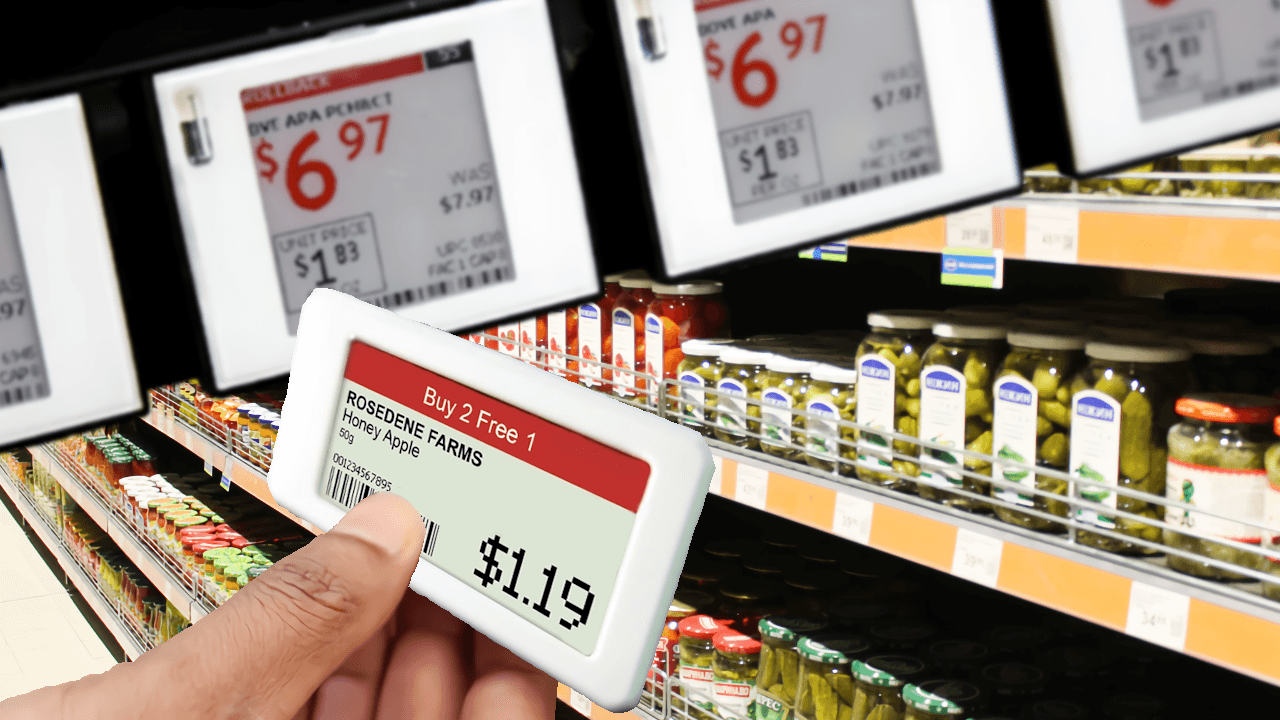
Retailers have always faced a dilemma when setting prices. Charging too little or charging too much can each result in a retailer going out of business. Grocery retailers have been under particular scrutiny. This scrutiny has only increased with the use of electronic shelf tags. Peter Andrews, a managing director at Alvarez & Marsal, explains, “With national grocery chains shifting to electronic price tags, the ability for retailers to deploy AI-enabled dynamic pricing may soon be commonplace as companies look to be more nimble amid rapidly shifting market forces. Improved responsiveness will not only help companies stay steady but also grow their bottom lines.”[6] He cautions, however, “Moving too quickly may come at the expense of their most loyal customers and attract regulatory attention.”
The Grocery Dive staff asks a very pointed question, “As it increasingly goes digital, how can the grocery industry champion affordability efforts while also rolling out pricing initiatives that may lead to some consumers paying more than others?”[7] With no clear answer to that question, they add, “It appears to be only a matter of time before retailers face consumer backlash. In some cases, they already have, such as Kroger for its digital coupons and dynamic pricing via electronic shelf labels. Given how top-of-mind grocery costs are, the industry would be wise to tackle consumer concerns head-on instead of expecting the dust to settle.” Because electronic shelf tags can let grocers easily change product prices, there is a fear of surge pricing depending on external conditions. To date, however, there is no evidence of such price gouging. Journalist Macklin Fishman reports, “Ioannis Stamatopoulos, an associate professor at the University of Texas at Austin and one of the researchers behind a separate study on the topic published in June [2025], said, ‘The facts show there is no surge pricing currently occurring. The basic economics of grocery retail is that they want to acquire customers and retain customers. It’s silly of them to risk upsetting you over gaining a few extra cents on an ice cream when it’s hot outside.’”[8]
Fishman also reports, “Dynamic pricing reduces food waste by up to 21%, according to a study from the University of California, San Diego’s Rady School of Management that was last revised in December 2023.” Journalist Rachel Barber reports, “The technology is more common in Europe, where Amanda Oren, the vice president of industry strategy for grocery at RELEX, said it has been received well by customers and retailers alike. ‘People should be ready to see the positives,’ she said. ‘Based on history, it shouldn't be an issue.’”[9]
Concluding Thoughts
Most consumers will remain price sensitive. They will look for deals and will expect to be treated fairly. Retailers, especially grocers, need to be tuned to consumer sentiment. Clemens concludes, “The path forward on data-driven pricing requires nuance, not broad prohibitions.” Andrews agrees that a light touch is necessary. He concludes, “Dynamic pricing is an essential tool that helps businesses better respond to a market moving faster than ever, but retaining customers in the transition depends on a well-thought-out strategy. AI can identify when and where to adjust pricing faster, but human judgment — and the right guardrails — remain essential.”
Footnotes
[1] Staff, “Ending Item Price Tests on Instacart,” Instacart Blog, 22 December 2025.
[2] Catherine Douglas Moran, “Instacart ends controversial price tests,” Grocery Dive, 22 December 2025.
[3] Maddy Varner, “Your Data Might Determine How Much You Pay for Eggs,” Wired, 2 December 2025.
[4] Helen Atkinson, “AI-Tuned Pricing and Inventory Strategies are the Way Forward for Retailers,” SupplyChainBrain, 2 July 2025.
[5] Eli Clemens, “State Data-Driven Pricing Bans Would Backfire on Consumers,” Center for Data Innovation, 14 June 2025.
[6] Peter Andrews, “What retailers need to know about AI-powered pricing,” Grocery Dive, 23 February 2026.
[7] Staff, “The Friday Checkout: Will grocery be in the pricing hot seat?” Grocery Dive, 12 December 2025.
[8] Macklin Fishman, “How digital price tags could change the future of grocery shopping,” CNBC, 3 October 2025.
[9] Rachel Barber, “Electronic shelf labels let stores update prices instantly. Will your grocery bill rise?” USA Today, 9 October 2025.