Jun 11, 2026
Stephen DeAngelis
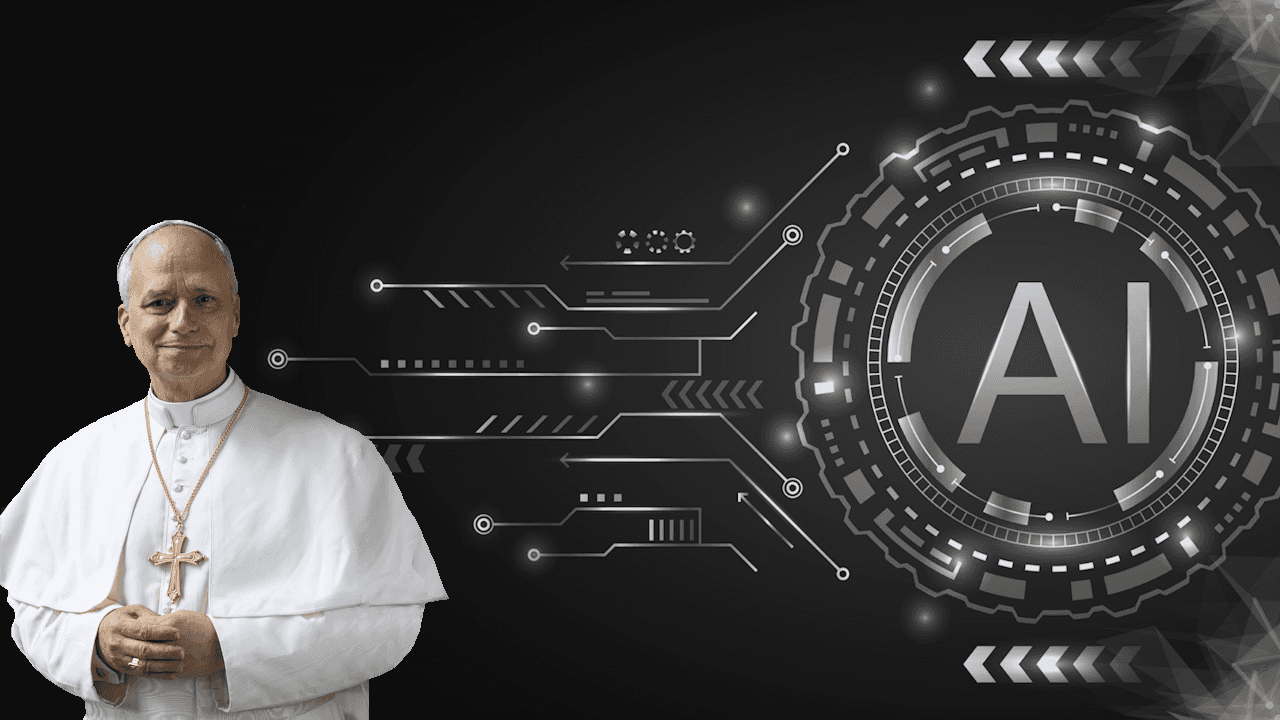
In 1615, the Catholic Church’s Roman Inquisition investigated Galileo Galilei as a result of his championing the Copernican concept of heliocentrism. In 1632, miffed by the investigation and its conclusions, Galileo published a defense of his positions that outraged Pope Urban VIII. Galileo was subsequently tried by the Inquisition, found guilty of heresy, and ordered to spend the remainder of his life under house arrest. Although that dispute between the Church and science raised eyebrows among an elite group of clerics and scientists, it didn’t make the kind of global headlines that Pope Leo XIV made when he published his first encyclical entitled “Magnifica Humanitas.” Why did Pope Leo’s encyclical make such a splash? After all, as the editorial board of the Wall Street Journal notes, “The encyclical is in many ways an attempt to protect and defend the dignity of humanity, and in that sense is welcome.”[1] The encyclical stirred copious amounts controversy because of its views on artificial intelligence and how AI might affect humankind.
Pope Leo’s Views About AI
The Catholic website Ascension reports, “Pope Leo XIV’s first encyclical, Magnifica Humanitas (‘Magnificent Humanity’), addresses one of the defining questions of our age: how to safeguard human dignity in the era of artificial intelligence. Signed on May 15, 2026, and released on May 25, 2026, the document explores technology, human identity, work, truth, and the Christian vision of authentic humanity.”[2] The website’s brief summary of the document, which contains over 42,000 words, follows:
“Magnifica Humanitas acknowledges familiar concerns about AI, including job insecurity, manipulation of information, privacy violations, ideological bias, autonomous weapons, and a futuristic vision of an ‘enhanced human being.’ But Pope Leo XIV identifies a deeper danger: that human beings may begin to see themselves and others as projects ‘to be optimized’. Against this, the encyclical teaches that human limits such as illness, aging, suffering, and vulnerability are not simply defects to be corrected; rather, human beings often flourish through their limitations, where they can discover wisdom, experience the closeness of others, and encounter the Lord. Therefore, AI should serve humanity not by tempting us to escape limitation through optimization, but by supporting a life of ‘openness and communion’.”
The encyclical concludes, “Technology is not simply a tool. When it becomes the standard by which everything is judged, it begins to dictate what matters and what can be discarded, reducing creation to an object of exploitation and human beings to mere cogs in a system driven toward ever greater efficiency.”[3] The Ascension staff concludes, “[The encyclical’s] central questions apply to all people: What is a human person? Should technology serve human dignity or reshape it? How do we protect truth, freedom, work, relationships, and especially those who are poor and vulnerable in an age of AI?” Since the encyclical raises such questions, it could make some people question whether Pope Leo is anti-technology. The Ascension staff doesn’t believe he is. They write:
“Is Pope Leo XIV against AI? Is he saying AI is ‘good’ or ‘bad’? No. Pope Leo XIV is not against AI. He does not issue a blanket condemnation of AI, nor does he praise AI as inherently good. The encyclical addresses the goods and dangers of technology, while also supporting innovation, productivity, and business enterprise. He teaches that these advances must remain ordered to human dignity rather than becoming the ultimate measures of value. Pope Leo XIV teaches that technology can ‘heal, connect, educate and protect our common home,’ but it can also ‘divide, exclude and generate new forms of injustice.’ AI can be a ‘valuable tool,’ but it is not morally neutral in practice because it takes on the characteristics of those who ‘devise it, finance it, regulate it and use it.’”
Reactions to the Encyclical
It comes as no surprise that the reactions to Pope Leo’s encyclical are mixed. According to journalist Cade Metz, many of the encyclical’s prime targets, Silicon Valley executives, are likely to ignore it. In an interview with Jeremy Nixon, founder & CEO of Infinity Artificial Intelligence Institute, Nixon told him “the papal encyclical might mean something to the world’s Catholics, but he doubted that it would have an effect on Silicon Valley.”[4] In fact, Metz writes, “The response to the encyclical from across Silicon Valley was fairly muted.”
Journalist Jason Hiner writes, “Pope Leo XIV's widely expected manifesto on AI delivered a very clear set of recommendations that some call naive, while others characterize as courageous.”[5] Hiner notes that the encyclical harmonizes with OpenAI’s call for an “AI New Deal” (i.e., a new social contract in the AI Era)[6] as well as Anthropic’s workgroups which are discussing the moral foundations of AI. Hiner adds, “I'll admit my skepticism toward the actions of OpenAI and Anthropic, since they are also trying to win over a skeptical public.”
Historian and journalist Jill Lepore looks beyond the technological aspects of the encyclical and sees something else. She writes, “The Pope diagnoses the greatest ill in the world to be a ‘culture of power’ in which those with the greatest resources determine the course of events with regard for nothing but for their own self-interest.”[7] The Wall Street Journal editorial board concludes that message encyclical is too woke. They write, “When it comes to AI, his encyclical mostly recites the most pessimistic prophecies. He largely dismisses AI’s potential benefits, such as faster and less expensive drug development and medical cures. His call for more government regulation of AI echoes opponents of capitalism. … There’s no doubt that as AI develops it will need an ethical rudder, and the pope’s contributions are worth listening to. But his faith in a beneficent state is misplaced.”
George Weigel, a distinguished senior fellow at the Ethics and Public Policy Center, doesn’t think the encyclical should be dismissed lightly. He writes, “[The encyclical] may seem an exercise in papal naiveté. A close reading of Pope Leo XIV’s inaugural letter … reveals something quite different: a great and energizing hope born of Christian faith. That faith in turn underwrites a striking confidence in the human capacity to do better than we’re doing at present.”[8]
Concluding Thoughts
As Weigel notes, “The pope is no Luddite. … [He appeals] to our highest aspirations rather than pandering to our worst prejudices or most virulent fears. That in itself is entirely welcome, and no small contribution.” Journalist Maurizio Brambatti adds, “The significance of Magnifica Humanitas lies in its ability to shape public conversation and moral imagination. Moral frameworks matter. They influence what societies fear, what they tolerate, what they defend — and what they refuse to sacrifice.”[9] Will the Pope’s call for caution slow down AI’s development? Probably not. His encyclical does remind us, however, that the future should belong to the humans who must coexist in the world being created by artificial intelligence. That won’t happen without the concerted effort of all stakeholders. Journalist Angela Giuffrida observes, “The pope warned that power over digital systems, infrastructure and data ‘does not rest with states but with major economic and technological actors,’ and that when such power was concentrated ‘in the hands of the few’ it tended to ‘become opaque and evade public oversight, increasing the risk of distorted forms of development that give rise to new dependencies, exclusions, manipulations and inequalities’.”[10] That is unlikely to change. Open dialogue about the future of AI and humanity, however, would be a welcome development. Perhaps that will be the Pope’s greatest contribution.
Footnotes
[1] Editorial Board, “Pope Leo’s AI Manifesto,” The Wall Street Journal, 27 May 2026.
[2] Staff, “Everything You Need to Know About Magnifica Humanitas,” Ascension, 25 May 2026.
[3] Maurizio Brambatti, “Pope Leo warns of AI’s risks to humanity in his first encyclical,” The Conversation, 25 May 2026.
[4] Cade Metz, “At the Epicenter of A.I., Pope Leo’s Warnings Are Dismissed,” The New York Times, 26 May 2026.
[5] Jason Hiner, “Pope's AI manifesto reframes the conversation,” The Deep View, 25 May 2026.
[6] See Stephen DeAngelis, “Keeping People First in the AI Era,” Enterra Insights, 28 May 2026.
[7] Jill Lepore, “What the Pope Said About A.I.” The New Yorker, 27 May 2026.
[8] George Weigel, “Babel or Jerusalem? Pope Leo weighs AI and the human condition.” The Washington Post, 25 May 2026.
[9] Brambatti, op. cit.
[10] Angela Giuffrida, “Pope Leo denounces ‘culture of power’ driving rise of AI,” The Guardian, 25 May 2026.