Mar 5, 2026
Stephen DeAngelis
For the past year, numerous articles have observed that the U.S. economy is now K-shaped. As economic journalist Christopher Rugaber observes, “From corporate executives to Wall Street analysts to Federal Reserve officials, references to the ‘K-shaped economy’ are rapidly proliferating.”[1] Like many people, he then asks, “So what does it mean?” In simple terms, it’s good news for the rich and bad news for everyone else.
Economist Mark Thornton, a Senior Fellow at the Mises Institute in Austria, explains, “For a visual description, imagine a graph where the vertical axis forms the vertical height line of the K. From the vertical axis two lines emerge to form the K — one upward sloping and one downward sloping. The economic interpretation starts at a point in time when the economy was moving in a kind of equilibrium with all sectors and industries moving together in unison, including aggregate income and labor markets. Then, at that point in time, instead of the overall economy moving in unison upward with economic growth, or downward into recession, there is a noticeable divergence. The upward trend line of the K represents the fortunes of high-income salary earners, the wealthy, and the high-tech and luxury goods industries. The downward trend line of the K represents the fortunes of the working class and the poor. Essentially, the rich are getting richer, the poor are getting poorer, and the middle class is shrinking.”[2] He adds, “This divergence is too stark to deny.”
The K-shaped Economy — Not New, but Important and Changing
Due to the recent spate of articles about the K-shaped economy, one might conclude it is a recent phenomenon. However, economists Beth Ann Bovino and Matt Schoeppner explain, “The K-shaped economy reflects a long-standing divergence where wealthier households benefit from asset appreciation, better schools and technology, while lower-income families face structural disadvantages and financial strain.”[3] They note, however, “Today, the K-shape has become the defining lens for understanding resilience and vulnerability between the haves and the have-nots. It continues to steer consumption and borrowing patterns, widen generational divides and influence policy debates. Moreover, new forces — higher interest rates, persistent inflation and the rapid adoption of transformative technologies such as artificial intelligence (AI) — appear to be amplifying these disparities even further. After decades of debate on the subject, it’s no surprise that the effects of rising income inequality are complex. To some extent, it’s necessary for a market economy to function, as it incentivizes investment and expansion. However, excessive income concentration can also undermine growth by fueling political polarization, while reducing overall demand in the economy.”
Bovino and Schoeppner assert that “rapid technological change” is reshaping economic dynamics and calls this shift “inevitable.” If you are wondering whether the term “K-shaped economy” is simply a buzzword used by the popular press, Mark Zandi, chief economist at Moody’s Analytics, insists it is not. He explains, “This is not a cyclical or temporary phenomena. This is a structural, fundamental issue.”[4] Bovino and Schoeppner conclude, “How the U.S. adapts workforce skills will ultimately determine whether AI-driven innovation — and the new industries it spawns — flattens the K or keeps the economy on its familiar path. Therefore, building digital literacy will be a critical step in preparing current and future workers to integrate these tools into their workflows.”
How the K-shaped Economy Affects Consumer Spending
Business reporter Lora Kelley observes, “‘K-shaped’ entered the popular parlance in 2020 and is now ubiquitous, used for divergent consumer outlooks, unsteady spending at stores and restaurants, and even corporate stumbles, as some companies, especially tech-focused ones, thrive while the prospects of others decline. Moody’s Analytics recently estimated that the top 10 percent of households were responsible for nearly half of all spending.”[5] While a model — like the K-shaped model — can be useful, Katie Thomas, an analyst with the Kearney Consumer Institute, cautions that any simplified model fails to capture the complexity of the economy. She explains, “Economic models like the K economy can be great tools for simplifying and illustrating complex economic arguments. They can also limit our understanding of what is happening to consumers at all levels of the economies they are trying to describe. Getting at consumer motivations and a deeper understanding of consumer behaviors requires a much more nuanced approach than just pointing out asymmetry.”[6]
Thomas laments, “K economy analytics tend to blend divergent consumer behaviors together and then spread them like the data equivalent of peanut butter across a series of demographic cohorts, creating an ‘average’ consumer who does not, in fact, actually exist.” Thomas describes consumers located on either the “arm” or the “leg” of the economy’s K. At the tip of the arm, Thomas places “individuals whose names and faces include those who regularly appear in the media with super-high incomes.” She continues, “Slightly below them, but still well above everyone else, we find the ‘stable/responsible,’ consumers who are stable and getting by just fine. … At the bottom of the arm, dangling perilously close to the middle or leg of the K, we have the ‘on thin ice’ — high earners whose lack of budgeting and profligate spending has them overleveraged and exposed.”
Thomas also divides consumers on the leg into three segments. She explains, “Starting at the top of the ‘leg’ [we find] consumers who are ‘comfortable.’ Their incomes technically put them in the bottom of the K, but their overall financial position is more secure on a day-to-day, year-to-year basis thanks to a variety of factors. Next are those who are ‘stable/responsible,’ relatively lower-income individuals who are constrained in their ability to spend but who have managed by choice and/or necessity to find ways to live within their means. Toward the bottom of the leg, we find low- to no-income people who are truly ‘on thin ice.’ These are folks struggling to pay their basic bills at the same time they are being crushed under a mountain of structural debt-promoting forces.”
Mark Mathews, Chief Economist and Executive Director of Research at the National Retail Federation, reports that K-shaped economy is becoming evident in consumer spending. He explains, “What is clear is that across lower- to middle-income households, growth in spending has begun to slow. However, top-line spending remains robust, and some sectors have even managed to retain or grow their share across income groups. We expect to see continued growth at a top-line level for retail into 2026, but it is clear that not all segments of the consumer will be driving this growth.”[7] Mathews conclusions are backed up by data from the Federal Reserve Bank of New York, which reports, “Spending among higher-income U.S. consumers has increased by 2.3% over the last three years, compared to just 1.6% for middle-class households making between $40,000 and $125,000, and less than 1% for those earning under $40,000.”[8]
Concluding Thoughts
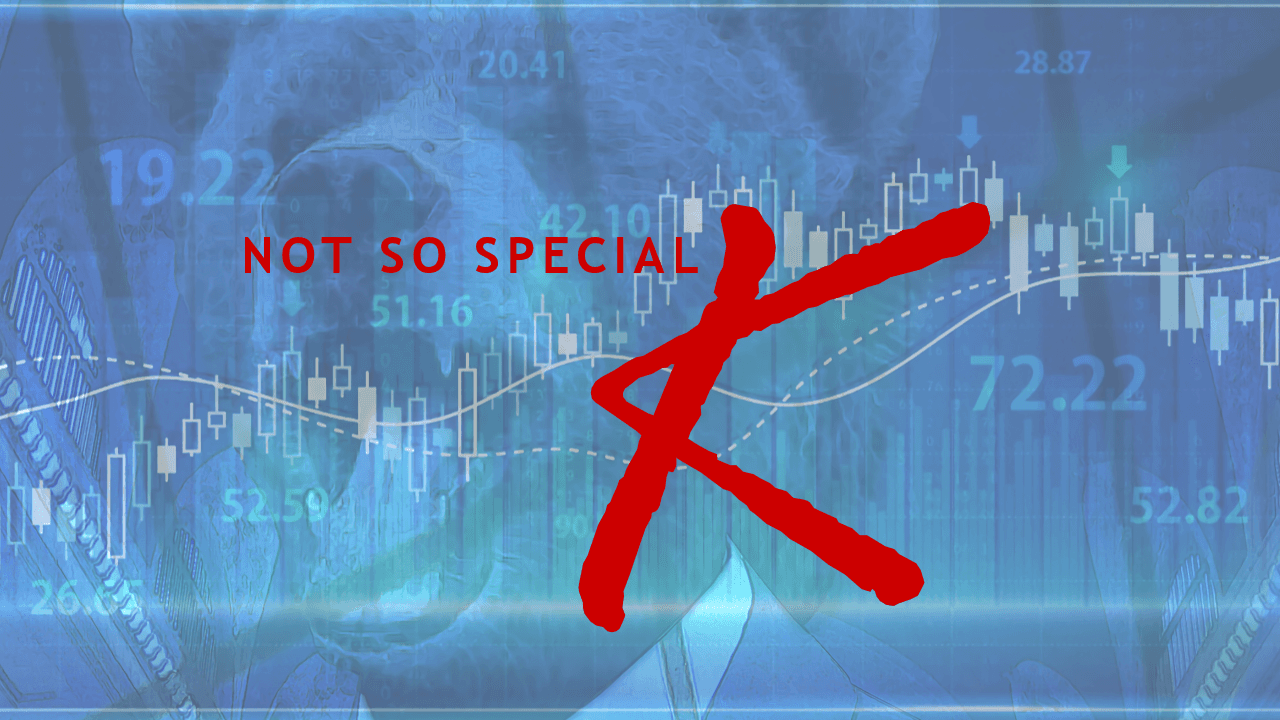
When you look at variations in spending by consumers of different ages, patterns emerge that only relate peripherally to the K-shaped economy. Younger consumers are markedly more pessimistic about the economy than older consumers. Journalist Helen Atkinson writes, “Retailers could get whiplash trying to keep up with youthful consumer spending habits, but they better get good at it as the upcoming generations emerge as mature consumers.”[9] At Enterra Solutions®, we avoid generalizations about consumers and look more deeply into the consumer landscape. Our Enterra Consumer Insights Intelligence System™ allows clients to quantitatively uncover and logically understand the inter-relationships that lead to heightened consumer understanding, hyper-personalized product recommendations, and new product innovation. This is critical in today’s complex consumer landscape. The bottom line, however, is that, for consumers on the leg of the K, this economy is nothing special.
Footnotes
[1] Christopher Rugaber, “Here’s why everyone’s talking about a ‘K-shaped’ economy,” Associated Press, 1 December 2026.
[2] Mark Thornton, “The K-Shaped Economy,” Mises Wire, 15 December 2025.
[3] Beth Ann Bovino and Matt Schoeppner, “The K-economy in 2026: Same story, new amplifiers,” US Bank Economic Commentary, 7 January 2026.
[4] Thornton, op. cit.
[5] Lora Kelley, “When Did Everything Become ‘K-Shaped’?” The New York Times, 19 December 2025.
[6] Katie Thomas, “Hidden dimensions of the K-shaped economy: detailing how income, lifestyle, and circumstance shape consumer stress and spending,” Kearney, Fourth Quarter 2025.
[7] Mark Mathews, “Is retail spending really K-shaped?” National Retail Federation, 5 February 2026.
[8] Staff, “'K-Shaped' Spending Gap Widens for U.S. Consumers,” SupplyChainBrain, 4 February 2026.
[9] Helen Atkinson, “Retailers Warned of the Counter-Intuitive Spending Habits of Gloomy Young People,” SupplyChainBrain, 14 January 2026.