Aug 11, 2026
Stephen DeAngelis
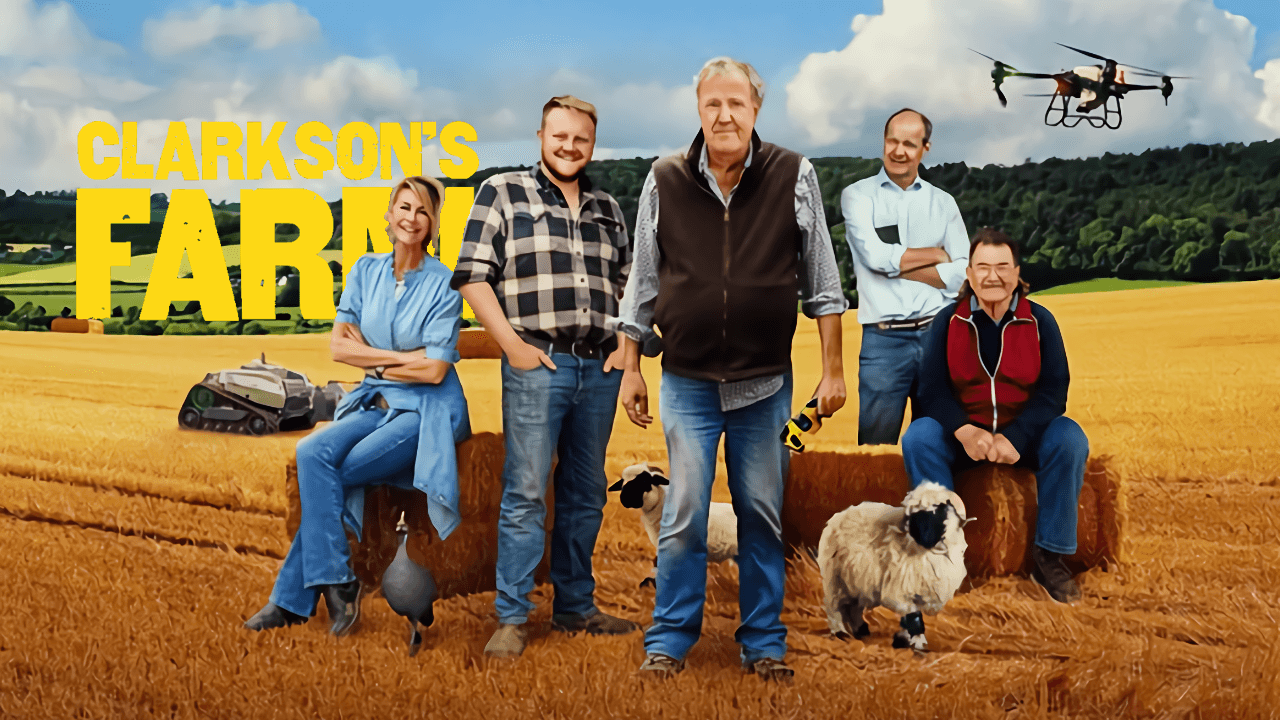
An early-June email from the editors of The Economist noted that Jeremy Clarkson, “Britain’s most famous petrolhead,” has become the country’s “most celebrated advocate for agriculture.”[1] Agriculture became Clarkson’s cause célèbre following his 2008 purchase of a roughly 1,000-acre piece of Cotswolds property, now famously known as Diddly Squat Farm. He named his acreage after the slang term “diddly squat” indicating its lack of productivity. He originally bought the land as an investment. For nearly a decade, he leased the property out for local contract farming until 2019 when he began managing the farm himself. His efforts to run the farm have been hilariously documented in the Amazon Prime series “Clarkson’s Farm.” In episode 3 of the series’ fifth season, Clarkson and his young farm manager, Kaleb Cooper, visit a modern Dutch farm about the same size as Clarkson’s. They are blown away by what they find.
The farm, which straddles the Belgian and Dutch borders, is owned by potato farmer Jacob van den Borne and is about the same size as Clarkson’s farm. Van den Borne, however, makes significantly more money than Clarkson — thanks to technology. In the episode, Clarkson tells Cooper that van den Borne is doing well “because he's adopting the future.” Van den Borne explains to the duo that he turned his farm around when he adopted precision farming as his business model. Both van den Borne and Clarkson are convinced that the future of farming will include a lot more autonomous technology and precision farming.
Artificial Intelligence and the Future of Agriculture
“Of all the industries that seem primed for an A.I. disruption,” writes journalist Coralie Kraft, “agriculture may not look like the most obvious. For all its advancements in technology and mechanization over the centuries, farming is fundamentally about growing crops and raising livestock — and you can’t digitize an ear of corn.”[2] She continues, “But right now the industry is in the midst of what some are calling the fourth agricultural revolution, as driverless tractors trundle through fields, drones map moisture levels in soil, and cows are outfitted with Fitbit-like devices that track their eating patterns.”
While Clarkson and Cooper were in the Netherlands, they visited a floating dairy farm that was nearly a hands-free operation. At the dairy, free-range cows decide for themselves when to get hooked up to automatic milking machines and their every movement is monitored. Everything else in impressive, sustainable operation is also monitored. Around the globe, farmers are learning the benefits of precision agriculture and automation technologies. Yu Jiang, an assistant professor at the College of Agriculture and Life Sciences at Cornell, told Kraft “that within a few years, most large American farms will have incorporated A.I. into their operations. The result, he says, will be a transformational shift not just in how farms are run but ‘in how we think about farming as a job’.”
Adopting new technologies in agriculture is not just about buying a new, shiny toy. As Kraft explains, farmers are having trouble finding enough workers and technology seems to provide a partial answer to that challenge. Technology also promises to increase productivity, improve sustainability, and keep farmers profitable. However, as Kraft observes, “The equipment is expensive, and learning to use it takes time. It also requires accepting that day-to-day life is going to look and feel different.”
Benefits of Technology in Agriculture
The staff at Atlas Scientific reports, “Around 70% of all freshwater withdrawals worldwide are used for agriculture, which makes it the leading consumer of the planet’s finite water resources. With the continued growth of the global population — a figure we’re on track to see reach nearly 10 billion people by 2050, the pressure is only going to increase on agricultural water. This puts a lot of pressure on farmers to use water efficiently while maintaining or even increasing productivity.”[3] As a result, writes, Lori Tyler Gula, a public relations specialist with the U.S. Department of Agriculture’s National Institute of Food and Agriculture, “Across America’s farm country, one question keeps growers up at night. Are their crops getting the right amount of water and nitrogen? Too little can hurt yields. Too much drains farm budgets, washes into rivers and pollutes wells. Farmers know this balance matters, but finding the ‘just right’ level has always relied on guesswork, experience and weather luck.”[4] That is until now. Gula reports, “A research team at the University of Georgia, Iowa State University, and the University of Nebraska at Lincoln, funded by USDA’s National Institute of Food and Agriculture (NIFA), is working to change that. The team is building a new kind of farming tool that combines tiny sensors, simple hardware, software and machine learning. This system listens to plants and soil in real time and gives farmers clear guidance on when and where to irrigate or fertilize.”
AI, automation, and monitoring are not the only initiatives underway. Analysts from the European Union note, “Climate change, biodiversity loss, and resource scarcity are just some of the urgent issues facing farmers today. … Various initiatives are underway across the European Union to improve energy efficiency, cut waste, and reduce reliance on synthetic fertilizers and pesticides. Just some of these projects include harnessing humates to restore soil health, developing tomato varieties resistant to Tomato Brown Rugose Virus, and applying Electro Chemical Activation (ECA) technology to reduce chemical inputs.”[5]
One of the more controversial technologies available today is gene editing to produce better crop yields and plant nutrition. Journalist Augustus Bambridge-Sutton reports, “Gene-editing techniques such as CRISPR-Cas9 have many uses in the area of food and agriculture. They can combat persistent drought and disease, and improve the color and nutritional content of food while making it tastier to boot.”[6] He adds, “It remains a regulatory minefield, due to persisting ethical and safety concerns.” Some of those concerns are emotionally-based rather than scientifically-based. One real concern about genetically-modified organisms, Bambridge-Sutton reports, is “that a prevalence of gene-edited crops could afford overwhelming control of agriculture to a small group of biotech companies.”
Concluding Thoughts
I believe Jeremy Clarkson is correct that the future of agriculture will include a lot more technology. As noted above, there numerous benefits to practicing precision farming, not the least of which is using water more wisely. Josh A. Morrow, chief operating officer at Super-Sod in Georgia, believes that technology will both address labor shortages and attract new employees. He told Kraft, “It’s a challenge, hiring people who want to work in agriculture. Most people think about working on a farm and they think about sitting on a tractor and sweating. With our robots and autonomous tractors, we’ve been able to attract a younger group of folks who are interested in technology, and then they become interested in farming. Gamer kids are coming out and running some of our autonomous units. We also have autonomous harvesters that literally have gaming chairs with joysticks, so they’re running them like a game. I mean, we’re attracting a new work force that we didn’t even know was possible.” That’s the future in a nutshell.
Footnotes
[1] Editors, “Down on the farm with Jeremy Clarkson,” The World in Brief, 6 June 2026.
[2] Coralie Kraft, “From Cow-Milking Robots to Weed-Zapping Lasers, Farmers Are Embracing A.I.,” The New York Times, 5 June 2026.
[3] Staff, “The Uses Of Water In Agriculture,” Atlas Scientific, 11 August 2025.
[4] Lori Tyler Gula, “New Technology Lets Plants Tell Farmers When They Are Thirsty,” USDA National Institute of Food and Agriculture, 26 February 2026.
[5] EU Staff, “Food tech in the EU: Future-proofing fruit and vegetable production,” Food Navigator Europe, 24 June 2025.
[6] Augustus Bambridge-Sutton, “Gene editing: Feeding the future or fuelling controversy?” Food Navigator Europe, 29 July 2025.